
<tfoot id="eetj7"><menuitem id="eetj7"></menuitem></tfoot>
<tfoot id="eetj7"><menuitem id="eetj7"></menuitem></tfoot>

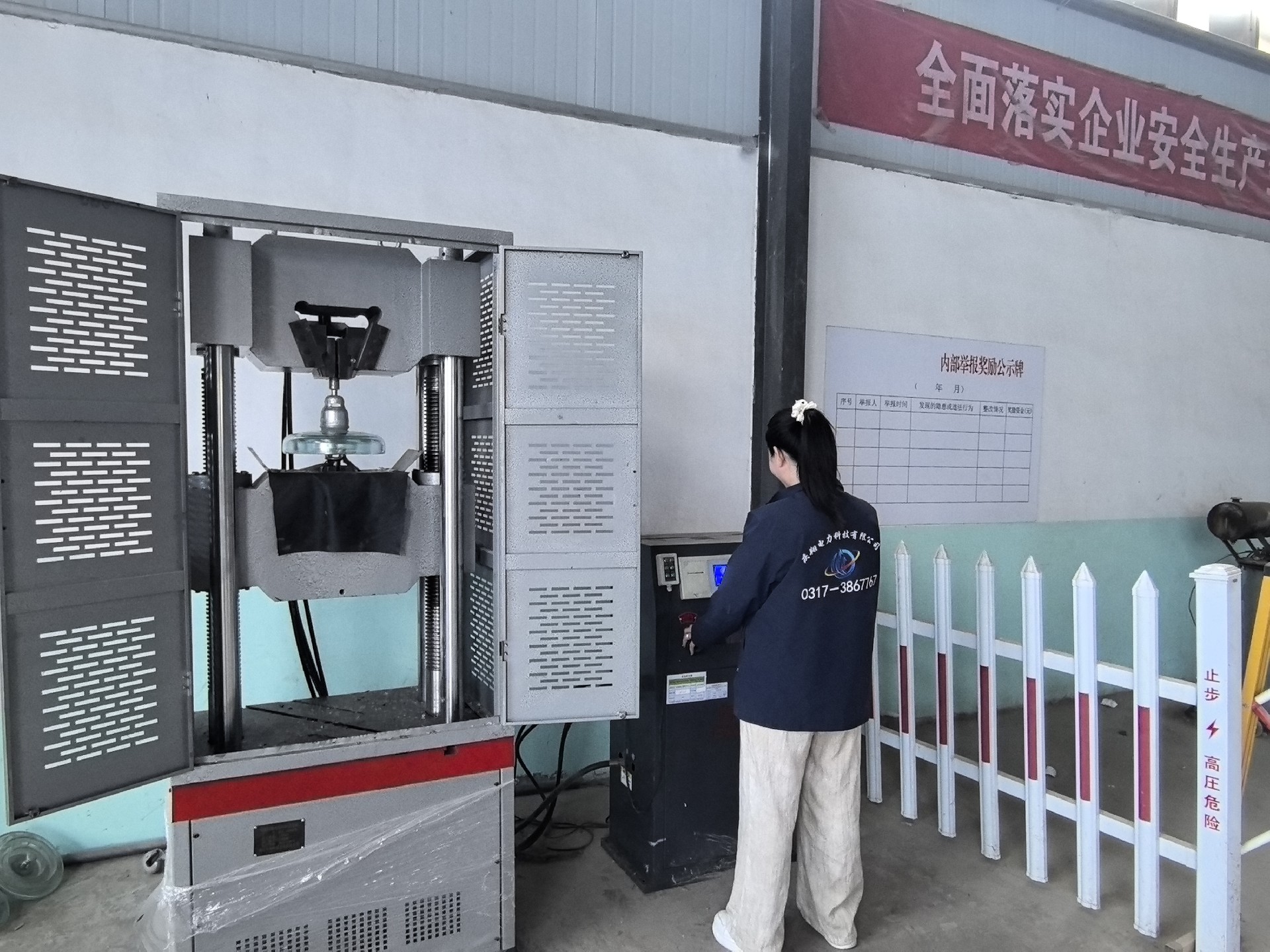
Glass Insulator Destructive Tensile Test
The destructive tensile test for glass insulators, also referred to as the mechanical destructive load test, is a crucial testing item for evaluating the mechanical performance of insulators
This test primarily involves the following aspects:
1. Test Standards
The test methods generally adhere to national standards, such as:
GB/T 775.3-2006 “Test methods for insulators - Part 3: Mechanical tests”
GB/T 1001.1-2021 “Insulators for overhead lines with a nominal voltage above 1000 V - Part 1: Ceramic or glass insulator units for a.c. systems - Definitions, test methods and acceptance criteria”
.
2. Test Equipment
Conducting this test requires specialized tensile testing machines, such as electronic universal material testing machines or insulator tensile testing machines
3. Key Steps in the Test Process
Sample Preparation: Before testing, the insulator’s metal cap and steel pin are typically bonded and fixed using an adhesive. This step requires a specific curing period to ensure bonding strength
.
Installation and Calibration: The prepared insulator sample is installed into the fixtures of the tensile testing machine. To ensure testing accuracy, the axis of the applied tensile force must be aligned with the central axis of the insulator itself
.
Application of Tensile Force: The testing machine is started, applying a tensile force to the insulator at a constant rate
.
Recording and Judgment: The load is continuously increased until the insulator fails (e.g., fractures or shatters), and the maximum load value at failure is recorded
. This value must not be less than the rated mechanical strength value for the batch of insulators to be judged as qualified.
This test is essential for ensuring the quality of insulators. According to relevant regulations, a certain number of insulators (e.g., 8 units) from batches in service for typically 2 to 4 years are usually sampled and subjected to electromechanical destructive load testing to check for performance degradation.




<tfoot id="eetj7"><menuitem id="eetj7"></menuitem></tfoot>
<tfoot id="eetj7"><menuitem id="eetj7"></menuitem></tfoot>